Mt Spurr, Alaska
Mount Spurr
Mt Spurr is a stratovolcano located west of Anchorage, Alaska. It is the highest peak in the Aleutian Arc. The volcano was named for the explorer Josiah Spurr who worked for the USGS.
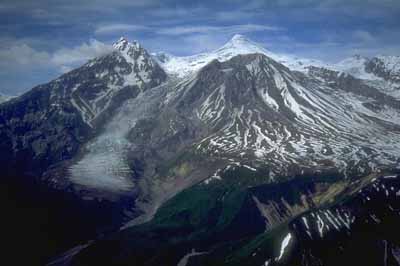
Mount Spurr, Alaska USGS
Destruction of the original summit
Original summit
Mount Spurr is a lava dome that sits inside a caldera three miles wide. The original summit of the mountain was destroyed by a debris avalanche and pyroclastic flows.
Debris avalanche 15 miles long
Some of the blocks carried down the mountain in a debris avalanche were over 300 feet in diameter. They traveled over 15 miles away from the summit before being deposited at the base of the volcano.

Click for More Information and to Order
Mt. Spurr Tallest peak in the area
Mount Spurr today
Today several lava domes sit in the caldera besides Mount Spurr. Mount Spurr is the tallest of the peaks in the area. It is 11,070 feet above sea level. It is also the summit peak on the mountain.
Monitoring the mountain
The peak and its neighbors are constantly being monitored by geologists. They are a major threat to airliners if they suddenly erupted without warning and a jet plane flew through an ash cloud.
What are lava domes in calderas
Dacite domes
After major eruptions of stratovolcanoes lava domes often form inside the caldera. They are generally dacite lava domes that can form small volcanoes made of lava that does not flow away from the vent inside the caldera. The lava piles up around the vent because it does not have enough gases and pressure to erupt explosively.
Why are lava domes dangerous
Lava domes that form in calderas are slow growing and you could easily walk fast enough to escape when an eruption is happening. The danger from lava domes is when they collapse after becoming unstable. The gases and debris inside the dome create deadly pyroclastic flows that can travel at hurricane speeds away destroying everything in their path.
KIDS FUN Science Bookstore


Check out Myrna Martin's award winning textbooks, e-books, videos and rock sets. The Kids Fun Science Bookstore covers a wide range of earth science topics. Click here to browse.